
A Short History of Possession
The Last of the MohicansThis flow traces the novel's opening contrast between claims of conquest and the gradual displacement of the Mohicans from their homeland.
increasing Bearing strength in each event
 decreasing
Bearing strength in each eventdecreasingTwo Migration Stories
Origins Compared
The Mohican Account
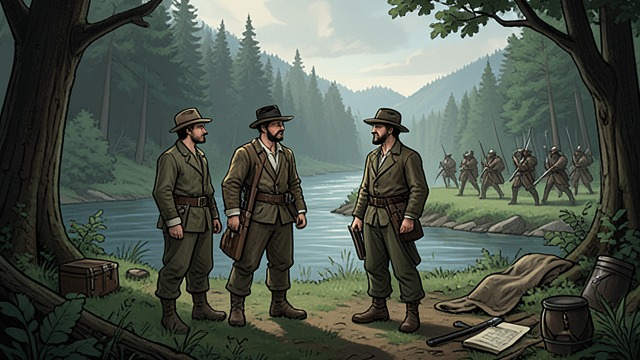
Chingachgook tells how his ancestors came east and fought for the country they claimed. His account treats the land as an inheritance established through memory and struggle.
Hawkeye's Reply
Hawkeye compares Native migration with European arrival across the sea. His argument challenges the idea that only one people can claim a history of conquest.
Their debate makes competing origins central to the meaning of the frontier.
A Country Before the Europeans
Life Before Displacement
Land and Sustenance
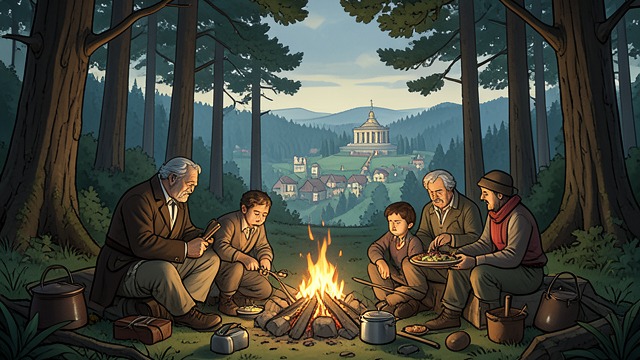
Chingachgook recalls fish, deer, birds, family, worship, and security from rival tribes. His memories make the homeland a lived community rather than an abstract territory.
A Historical Contrast
The calm he describes stands against the present forest filled with soldiers and ambushes. The change is both political and intimate.
The remembered country makes subsequent loss legible through ordinary life.
The Dutch Arrival
Contact and Consequence
A Peaceful Beginning
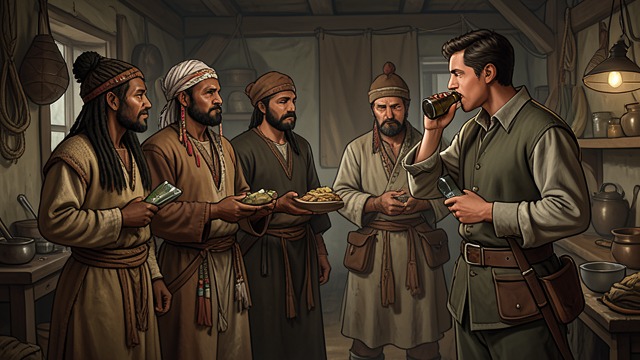
Chingachgook says the first pale faces arrived while his people were at peace. The newcomers were not initially remembered as battlefield enemies.
An Unequal Exchange
The Dutch introduced firewater, and the Mohicans eventually surrendered land. The account links dispossession to exploitative exchange as well as direct force.
The first contact begins a sequence of losses that later generations inherit.
Retreat from the Shores
Land Lost by Inches
A Gradual Retreat
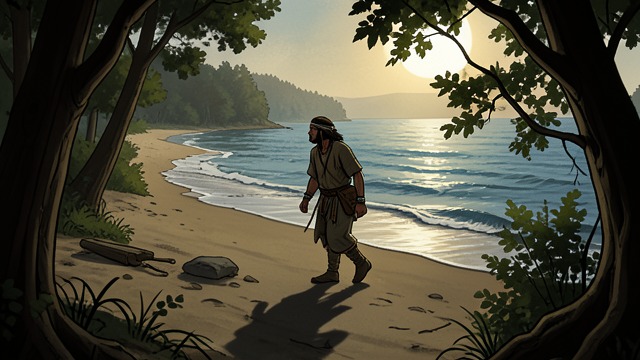
Chingachgook describes his people being driven back from the shores foot by foot. His own diminished access to sunlight and ancestral graves gives the loss a personal scale.
A Vanishing Presence
The people who once occupied a broad territory are now reduced to a few survivors in the region. The history makes the present military conflict part of a longer displacement.
The frontier's apparent wilderness is already a landscape of earlier dispossession.
The Last of the Line
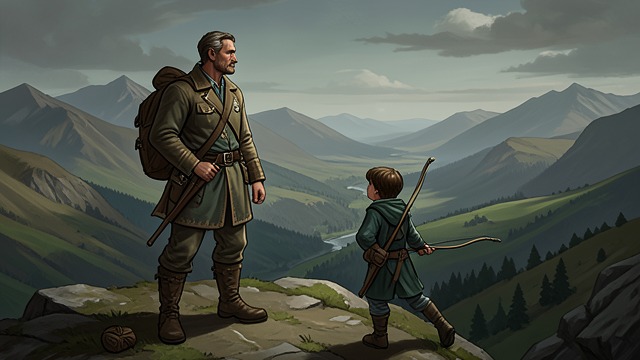
Inheritance at Risk
The Family's End
Chingachgook says his relatives have died one by one and names Uncas as the last Mohican. The loss of territory is matched by the threat of a disappearing family line.
A Future Not Yet Closed
Uncas's presence makes survival possible, but no broader restoration is promised. The opening leaves the people's future under pressure from history and current war.
The title's central idea emerges through one father's account of land, kinship, and decline.
During Hawkeye and Chingachgook's debate beside the stream
In Chingachgook's recollection of the Mohican homeland
In the recalled period when European settlement first reaches the Mohicans
After generations of European settlement, before the present war
At the end of Chingachgook's recollection, before the attack begins
